Credits: Image generated using Meta’s Llama 3 (right) and ChatGPT (left), based on prompts such as “children running all over a hill,” “similar clothes (entanglement),” “sunrise,” “quantum,” “opposite directions,” etc. Suggestions from Meta were incorporated. The children, depicted as kindergarteners, represent atoms/electrons in a high-energy state between the states of zero (bottom of the hill) and one (top of the hill), as explained in the blog below. Michio Kaku – Quantum Supremacy. Motley Fool – Quantum is the New Silicon and other articles.
A New World is Born
Over the past 50-60 years, silicon-based computing has evolved remarkably, shaped by pioneers like Shockley, Shannon, and Moore. Despite advances in computational power, it remains rooted in the binary 1’s and 0’s of transistors and logic gates. Supercomputers are the pinnacle of this journey, but with Moore’s Law reaching its limits, silicon faces physical and computational barriers. How much further can we push?
The next 50 years will bring a revolutionary shift as we explore subatomic and electron-level computing, leading to advancements beyond our imagination. Breakthroughs in vaccine development, immune system understanding, disease treatment, defense, and space exploration are on the horizon. The coming decade of photonics advancements is especially exciting, unlocking new possibilities in these fields.
Computing and Simulation: The Evolution
The Ancient Greek Antikythera mechanism is considered the world’s oldest known computer. A remarkable mechanical device with 37 bronze gears, whose complexity wouldn’t be replicated for another 2,000 years. One set of gears in the mechanism was used to track the motion of the sun and moon, and it was so precise that it could even calculate irregularities in the moon’s orbit. The purpose of this ancient device was to “simulate” the movements of celestial bodies and explore the mysteries of the cosmos. In many ways, this early invention marks the dawn of computational and simulation technology. Today, we stand on the threshold of the next great leap in computing: the quantum computer, which may represent the next pinnacle of this evolution, rather revolution. This is the beginning of the next transformative wave. The birth of the 5T industry.
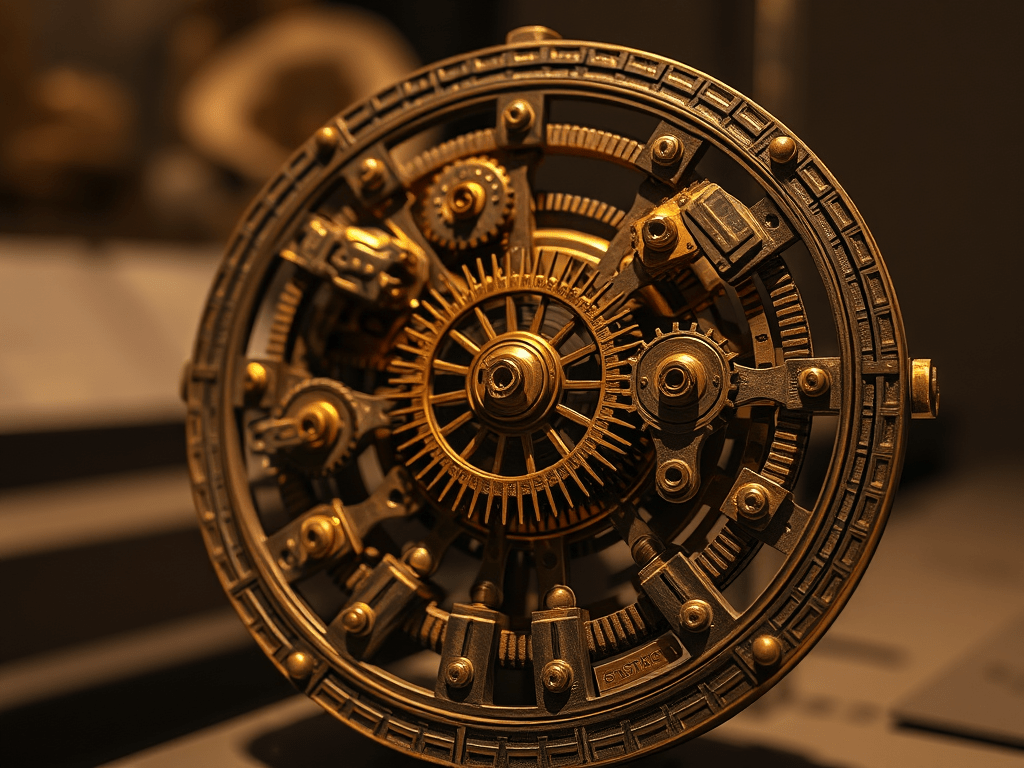
After the Antikythera mechanism, nearly 2000 years later in 1936, the genius Alan Turing invented the “Universal Turing machine,” which laid the foundation for all modern computers. From massive supercomputers at the Pentagon to the smartphones in our pockets, every computing device today is essentially a Turing machine.
After the Turing machine, came Colossus, the first programmable digital electronic computer, which was built using 2,400 vacuum tubes that filled an entire room. Fast forward to today, and we’ve shrunk billions of transistors into a space no larger than a fingernail. This astonishing miniaturization highlights 50 years of rapid scale and evolution in the silicon-based world of computing.
What this evolution demonstrates is humanity’s deep, enduring appetite for mathematics, data, and simulation – a drive that dates back centuries and shows no signs of slowing down. From mechanical devices to silicon-based systems, the journey continues, and there’s no stopping it.
What we see today with probabilistic AI and large language models (LLMs) is just the surface. These systems can only perform as well as the processing power behind them. Hardware and software must go hand in hand. But what real-world applications require this power? The answer is clear. As Google’s CEO put it, “I think AI can accelerate quantum computing, and quantum computing can accelerate AI.”
While commercial-grade quantum computers are still a few years away, over the next five years, we’ll begin to see the foundational tools—what I like to call the “picks and shovels“—of AI and quantum computing. A great example of this is NVIDIA, which has positioned itself as the “picks and shovels” provider in the AI world.
We’re on the verge of fundamentally changing the core of computing. In the next five years, the real opportunity lies in the “picks and shovels” of the quantum space—the tools and infrastructure that will enable these advancements. With an estimated $5 trillion worth of value to be captured in quantum computing, this is where the money will be.
Quantum Safe network readiness is ‘NOW” ! Quantum key distribution (QKD) and Post-quantum cryptography (PQC) are being built into the networks now, and in readiness for the future. Not just picks and shovels but for now it’s “Locks and Keys” (coined by Robert Winters, Head of this business). Photonics test at physical layer and all the way to application and security with TeraVM.
Today’s processors simply can’t keep up with the complex challenges we face—whether it’s gene editing, drug discovery, combating incurable diseases and viruses, military applications, or even unravelling the vast mysteries of our cosmos. The quantum revolution promises to bring answers that current technology can’t deliver.
- What is Life? In 1944, Erwin Schrödinger, famous for his wave equation, proposed that life is a by-product of quantum mechanics, with its blueprint encoded in an unknown molecule. Our DNA contains 3 billion base pairs. In 1989, scientists identified the mutation causing cystic fibrosis, a deletion of just three base pairs. Yet, we rely on the slow, trial-and-error method of Petri dishes for antibiotic development. Meanwhile, gene and viral mutations continue, leading to antibiotic-resistant diseases. Quantum computing with analysing and modelling billions of pairs, unthinkable with current computing platform, could unlock the molecular workings of genes. Thus enabling new therapies and tools to combat incurable diseases that have plagued humanity for centuries.
- How long and well can you live? For much of history, life expectancy was merely 20–30 years. By the early 1900s, it increased to 70 years, thanks largely to antibiotics and vaccines—developments born more out of luck than design. However, overuse of antibiotics has led to drug resistant germs. Creating new treatments take over a decade with significant investment, often making them commercially unfeasible. Simulating penicillin with traditional computers would require unimaginable resources, but quantum computing can handle such challenges with ease. It could revolutionize healthcare, enabling real-time virus detection, smart diagnostics like disease-alerting toilets, and early detection of conditions like ALS, cancer, and dementia. With quantum advancements, we could redefine the answer to how long and well we can live.
- Greening the world – Photosynthesis. Photosynthesis generates 15,000 tons of biomass per second, sustaining Earth’s green vegetation. Despite its significance, scientists still don’t fully understand how it works. Quantum computers could one day unlock the secrets of photosynthesis, paving the way for near-perfectly efficient photovoltaic cells, and making solar energy universally accessible and viable.
- Transportation Industry – Airbus is leveraging quantum computers to develop virtual wind tunnels, optimizing fuel-efficient flight paths for ascents and descents. Similarly, BMW is exploring quantum computing to improve battery technology, enhance aerodynamics, and boost safety.
The Science of Quantum Mechanics
The main image for this blog was generated using AI. The most visual description for what quantum computing or the mechanics of it, is in a podcast I came across on Motley Fool – Quantum is the New Silicon.
- Imagine a bunch of kindergarteners (akin to atoms) running up and down and sideways, and all over a hill. High energy, incoherent, tough to control and manage.
- The top of the hill is a state of 1 and bottom is a state of 0. Like in the silicon world.
- At any given time, we need to determine the chances (probabilistic) that a kid is likely closer to a 1 or a 0. Then slam an imaginary gate of a 1 or/and 0 and see which gate the kid takes. These gates are in the sub atomic space and in that real world would be magnetic fields and lasers. Plus the kids have to be slowed down, lower their energy in a controlled manner so they can be in a deterministic state.
- Qubits are infinite number of spots in between a 0 and 1 and in 3D space and in motion, the Quantum space has so many states to play with compared to the 0 and 1 in the silicon world we live in. Methods called entanglement, coherence, cooling (refrigeration) and many other methods are rapidly evolving. The atoms need to be controlled and directed. Fascinating.
- Today we see silicon and copper wiring on boards and substrates for the 1’s and 0’s to move around, and communicate inside of a computer. The next 50 years, sees this replaced by thin fibre filaments and light /laser beams that are moving qubits around and predicting states. Perfectly predictable in a probabilistic system.
Michio Kaku’s Quantum Supremacy is a brilliant read. Dusted the covers off, and I finally got to read it this holiday period. The Motley Fool podcast Quantum is the New Silicon does an excellent job simplifying this complex subject, and I found it even more insightful on how the mechanics work. These, along with various articles I’ve read, have shaped the ideas shared here.
At VIAVI Solutions, where I work with brilliant minds and hearts, we take pride in our innovation and legacy in fiber optics, data insights, and management. It’s exciting to see fiber, light, and photonics leading the way, with their relevance set to endure for at least the next 50 years, one year at a time.
I believe a revolutionary NEXT 50 years is upon us, and the NEXT 5 will be amazing.